
Dan Wang on China vs US, AI, and Why Energy Will Decide the Future
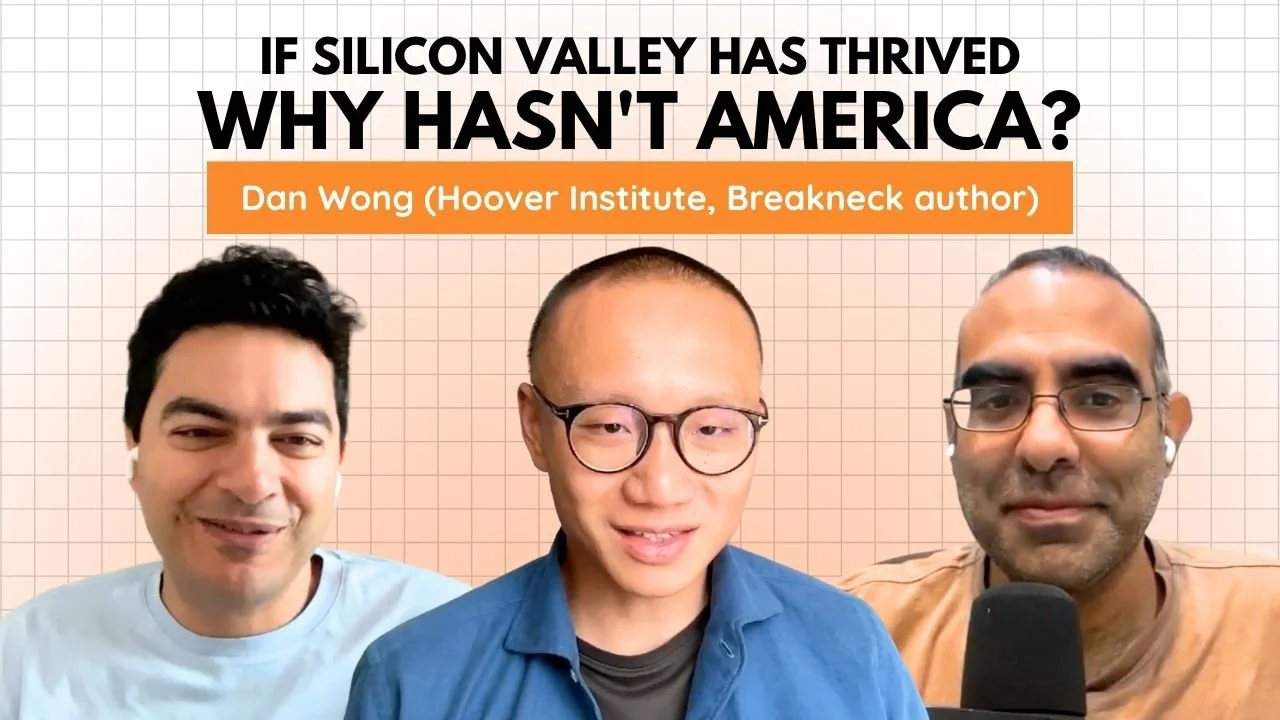
Dan Wang explains China vs US competition, why energy may determine the future of AI, and how “engineering vs lawyer” societies shape innovation.
In this episode of the Founders in Arms podcast, we sit down with Dan Wang, research fellow at the Hoover Institution and author of Breakneck: China’s Quest to Engineer the Future.
Dan brings a unique lens to one of the most important questions today: how China and the US are competing—and what actually determines who wins.
This conversation dives into:
Why energy may matter more than AI
The difference between “engineering” and “lawyer” societies
How China scaled infrastructure so quickly
Why America stopped building
The risks of over-indexing on AI
What founders misunderstand about geopolitics
How regulation shapes innovation
In this episode, we cover:
(00:00) The real bottleneck: energy, not AI
A key insight:
AI isn’t just about models—it’s about power.
AI requires massive electricity
The US is power-constrained
China is rapidly expanding energy production
Examples:
China building ~500 GW of solar vs ~50 in the US
30 nuclear plants under construction in China vs none in the US
Implication:
👉 If energy becomes the bottleneck, China has the advantage
(01:15) Dan’s journey into China
Dan didn’t set out to become a “China analyst.”
He:
Started in tech in San Francisco
Moved to China (2017–2023)
Lived through zero COVID and the tech crackdown
This firsthand experience shaped his perspective.
(03:45) Engineering vs lawyer societies
Dan’s core framework:
China = engineering society
US = lawyerly society
Meaning:
Engineering society
Builds infrastructure
Optimizes systems
Prioritizes execution
Lawyerly society
Focuses on rules and process
Prioritizes constraints and fairness
Slower to build
This framing explains a lot of the divergence.
(04:30) When engineers run governments
Engineers are great at building companies.
But at a societal level, there are risks:
Over-optimization
Lack of nuance
Ignoring human complexity
Examples:
One-child policy (simple but extreme solution)
Zero COVID (rigid, literal execution)
These reflect “engineering thinking” applied too rigidly.
(06:50) China’s massive upside
Despite the downsides:
Lifted hundreds of millions out of poverty
Built world-class infrastructure
Scaled manufacturing globally
This duality is critical:
👉 Progress + control exist at the same time
(09:45) America used to be an engineering society
Historically, the US built aggressively:
Railroads
Highways
Skyscrapers
Apollo program
Then something changed in the 1960s:
👉 Lawyers and regulators gained influence
(10:30) Why the US stopped building
The shift came from:
Environmental concerns
Legal constraints
Regulatory expansion
Result:
Slower infrastructure
More bureaucracy
Higher costs
Today:
Housing shortages
Broken transit systems
Delayed projects
(11:30) Can the US swing back?
There’s growing awareness:
Both left and right talk about “building again”
But they disagree on how
Problem:
Systems are deeply entrenched
Regulations are self-reinforcing
👉 The “pendulum” may not swing back easily
(13:00) Why lawyer systems are hard to undo
Key insight:
Lawyer-driven systems compound.
More rules → more lawyers
More lawyers → more rules
This creates:
👉 A self-reinforcing loop that’s hard to break
(24:00) Why AI might not decide everything
Silicon Valley belief:
👉 AI = everything
Dan’s pushback:
No single technology determines the future
AI may be overhyped as the sole driver
Instead:
👉 Execution, infrastructure, and energy matter just as much
(27:00) The real AI battleground: robotics
A critical shift:
AI models alone don’t create value
Physical execution does
Examples:
Robots
Manufacturing
Automation
China’s advantage:
👉 Stronger industrial base to apply AI
(30:00) The risk of AI backlash
As AI spreads:
Job displacement increases
Electricity costs rise
Misinformation becomes easier
This could trigger:
👉 Political and regulatory backlash
(33:00) The danger of misinformation
New tools like video generation introduce risks:
Hyper-realistic fake content
Weak information ecosystems
Harder trust verification
This is one of Dan’s biggest concerns.
(40:00) The “China duality”
Dan highlights a critical truth:
China is both:
Highly effective at development
Highly repressive politically
You must hold both ideas at once.
(44:50) America’s core tension
The US also has a duality:
Works extremely well for the wealthy
Works poorly for much of the middle class
Examples:
Expensive cities
Weak public infrastructure
Uneven access to opportunity
(46:30) Will China stagnate like Japan?
Open question:
Japan feels “frozen in time”
Will China face the same fate?
Dan’s view:
Less likely (more aggressive rebuilding)
But still possible
Key Takeaways for Founders
Energy may be more important than AI
Infrastructure determines what’s possible.
AI without execution is limited
Robotics and manufacturing matter more than models.
Regulation shapes innovation
Systems can either accelerate or block progress.
No system is purely good or bad
China and the US both have strengths and weaknesses.
The future isn’t decided by one technology
Multiple forces—political, economic, and technical—interact.
About the Guest
About Dan Wang
Dan Wang is a research fellow at the Hoover Institution and the author of Breakneck: China’s Quest to Engineer the Future.
He previously lived in China for six years, studying technology, policy, and economic development firsthand.
Listen to Founders in Arms
Founders in Arms is a podcast for builders—covering startups, AI, and the systems shaping the future.
🎙 Subscribe to Founders in Arms Podcast on your favorite platform
💬 Join the conversation at TribeChat.com
🚀 Discover more founder insights
