
Nicholas Rudder (Sphere) on Pivoting, Selling Before Building, and Global Tax Compliance
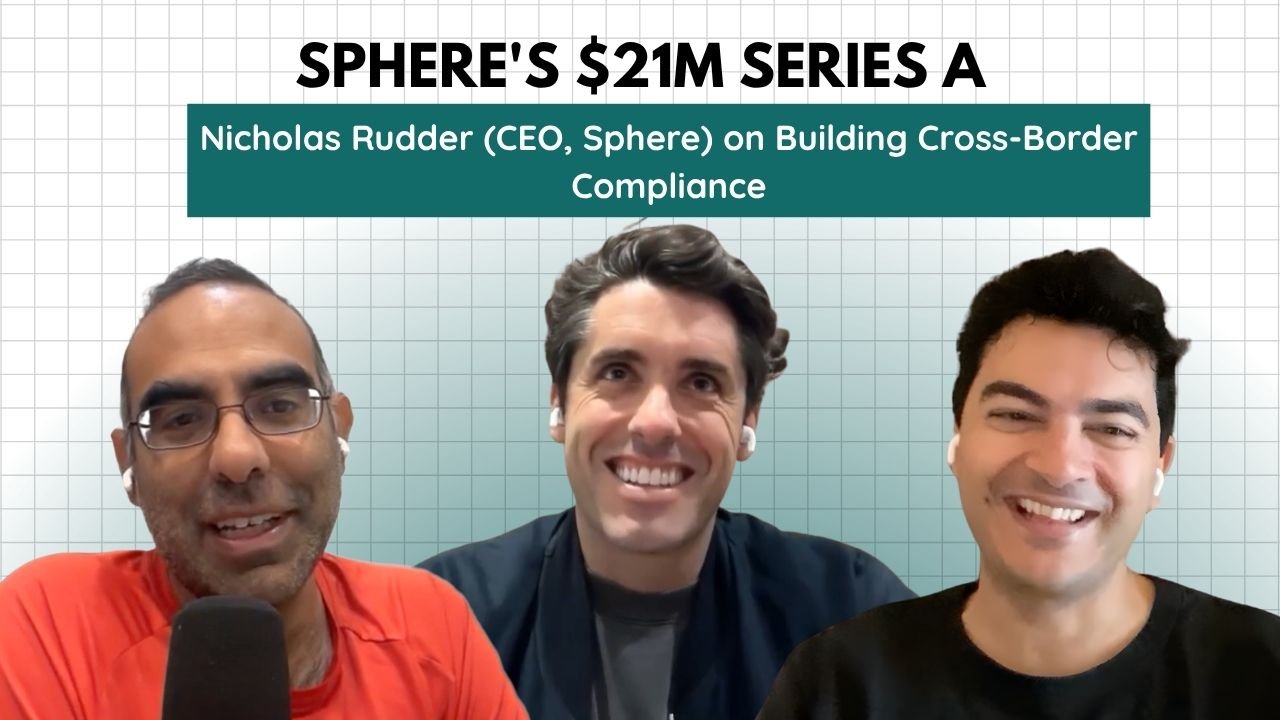
Sphere CEO Nicholas Rudder shares how he pivoted from edtech, sold a product before building it, and is tackling global tax compliance with AI.
In this episode of the Founders in Arms podcast, we sit down with Nicholas Rudder, co-founder and CEO of Sphere, to unpack one of the most raw and honest founder journeys—from failed startup to $21M Series A.
Nicholas shares how he pivoted from edtech to global tax compliance, sold customers before writing code, and built through one of the most intense personal and professional periods imaginable.
This conversation dives into:
Why edtech failed for them
How to pivot the right way
Selling a product before it exists
What global tax compliance actually is
Why international expansion is broken
Lessons from losing a co-founder
Building under extreme personal pressure
How to raise when you’re not trying to
In this episode, we cover:
(00:00) The vision behind Sphere
Sphere is building what Nicholas calls:
The “Deel for revenue-based compliance”
The goal is to help companies handle all the complexity that comes with selling globally:
Sales tax, VAT, GST
Withholding tax
E-invoicing
Tariffs
Cross-border compliance
Instead of fragmented tools, Sphere aims to unify it all.
(01:18) The failed edtech startup
Before Sphere, Nicholas built an edtech marketplace.
The idea:
Instructors create courses
Professionals buy them
Marketplace scales globally
The reality:
Content quality was inconsistent
Supply didn’t match demand
They became a content/media company
Key insight:
Edtech is often a “vitamin, not a painkiller”—nice to have, not urgent.
(02:50) The pivot to tax compliance
The pivot came from lived experience.
While running the marketplace, they hit a major problem:
👉 Global tax compliance was incredibly painful.
So Nicholas asked:
What do CFOs struggle with most?
What’s consistently broken across companies?
The answer kept repeating:
Indirect tax (sales tax, VAT, etc.)
That became the new company.
(07:00) Selling before building (Figma strategy)
One of the most important tactics:
Nicholas sold the product before it existed.
How:
Built a high-fidelity Figma prototype
Made it feel like real software
Ran it like a sales process
Result:
👉 Closed 5 paying customers before writing code
This validated demand early and de-risked the build.
(08:00) Why customers said yes
Early customers joined because:
Existing solutions were fragmented
International support was poor
Too many third-party providers
Manual processes everywhere
Sphere’s pitch:
👉 “We’ll do this natively, end-to-end”
That was enough to take the risk.
(10:30) The breaking point (getting called out)
Eventually, a CFO exposed the prototype:
Asked to click deeper into the product
Realized it wasn’t functional
Called it out live
That moment forced the transition:
👉 Time to actually build
(11:00) The hardest phase: everything at once
At the same time, Nicholas faced:
Co-founder leaving
Company pivot
High-risk twin pregnancy
Insurance issues in the US
Forced relocation to the UK
All while:
Selling
Building
Talking to tax authorities
It was a full collapse moment.
(13:30) What kept him going
Two main drivers:
1. Proving people wrong
Investors
Advisors
Himself
2. No safety net
“I had no money… we were going to go bankrupt… there was no option but to fight.”
This created a burn-the-boats mentality.
(15:30) The founder mindset shift
After going through extreme pressure:
You understand your limits
You gain long-term resilience
Future problems feel smaller
It creates a powerful psychological edge.
(19:00) Solo founder advantage
Nicholas didn’t replace his co-founder.
Instead:
Built a strong team of founding engineers
Offered them more equity
Created a highly technical core team
Insight:
👉 You don’t need a co-founder—you need strong talent.
(21:00) Why edtech is so hard
Core issue:
Users can’t easily create high-quality content
Platforms must intervene heavily
This turns into a non-scalable model
Result:
👉 You become a content business, not a tech platform
(24:00) The future of global businesses
A key trend:
Startups are global from day one
AI companies sell into 90+ countries quickly
But at the same time:
Regulations are increasing
Compliance is getting more complex
This creates a massive opportunity.
(26:00) AI + compliance
Nicholas’ thesis:
AI is perfect for compliance because:
Rules are complex and scattered
Data is unstructured
Needs constant updating
AI can:
👉 Interpret, map, and apply regulations automatically
(27:00) Expanding beyond tax
Sphere isn’t stopping at tax.
Long-term vision includes:
Withholding tax
Input tax
Tariffs
E-invoicing
But NOT areas like GDPR.
Focus:
👉 Everything tied to selling globally
(27:30) The unexpected Series A
The $21M raise wasn’t planned.
What happened:
Avoided talking to VCs
Sent consistent investor updates
A VC reached out with a real solution to a problem
That started the process.
Lesson:
👉 The best fundraising often happens when you’re not trying to raise
(30:00) Why VCs always know
Key insight:
“The minute you talk to one VC, they all know.”
Implications:
Fundraising must be tight and fast
Dragging it out makes you look weak
Scarcity increases demand
(33:00) Investor updates matter
Nicholas sent updates even at the lowest points:
During pivot
During personal crisis
When things looked bad
This built:
Trust
Credibility
Long-term support
(35:00) Why SF still wins
Compared to the UK and Australia:
More ambitious founders
Better capital markets
Higher density of talent
Stronger ecosystem
Conclusion:
👉 There’s no better place to build a startup (in his view)
(47:00) Hiring advice: get an internal recruiter early
One of the most practical tips:
Hire an in-house recruiter once you scale.
Why:
Better cultural filtering
Higher quality hires
Stronger talent pipeline
Long-term leverage
External recruiters:
Optimize for speed, not quality
Key Takeaways for Founders
Sell before you build
Validation beats assumptions.
Pivot based on real pain, not trends
Your best idea often comes from your own problems.
Hard moments create unfair advantages
Resilience compounds.
You don’t need a co-founder—you need great people
Structure matters less than execution.
Fundraising is a signal game
Scarcity and timing matter more than effort.
Global-first companies need new infrastructure
Compliance is becoming a massive category.
About the Guest
About Nicholas Rudder
Nicholas Rudder is the co-founder and CEO of Sphere, an AI-powered platform for global tax and compliance.
He previously worked in finance and pivoted from a failed edtech startup to build one of the fastest-growing compliance startups, raising $21M from Andreessen Horowitz.
Listen to Founders in Arms
Founders in Arms is a podcast for builders—covering startups, AI, enterprise software, and real founder stories.
🎙 Subscribe to Founders in Arms Podcast on your favorite platform
💬 Join the conversation at TribeChat.com
🚀 Discover more founder insights
