
A strange paradox at PSG unfolding…
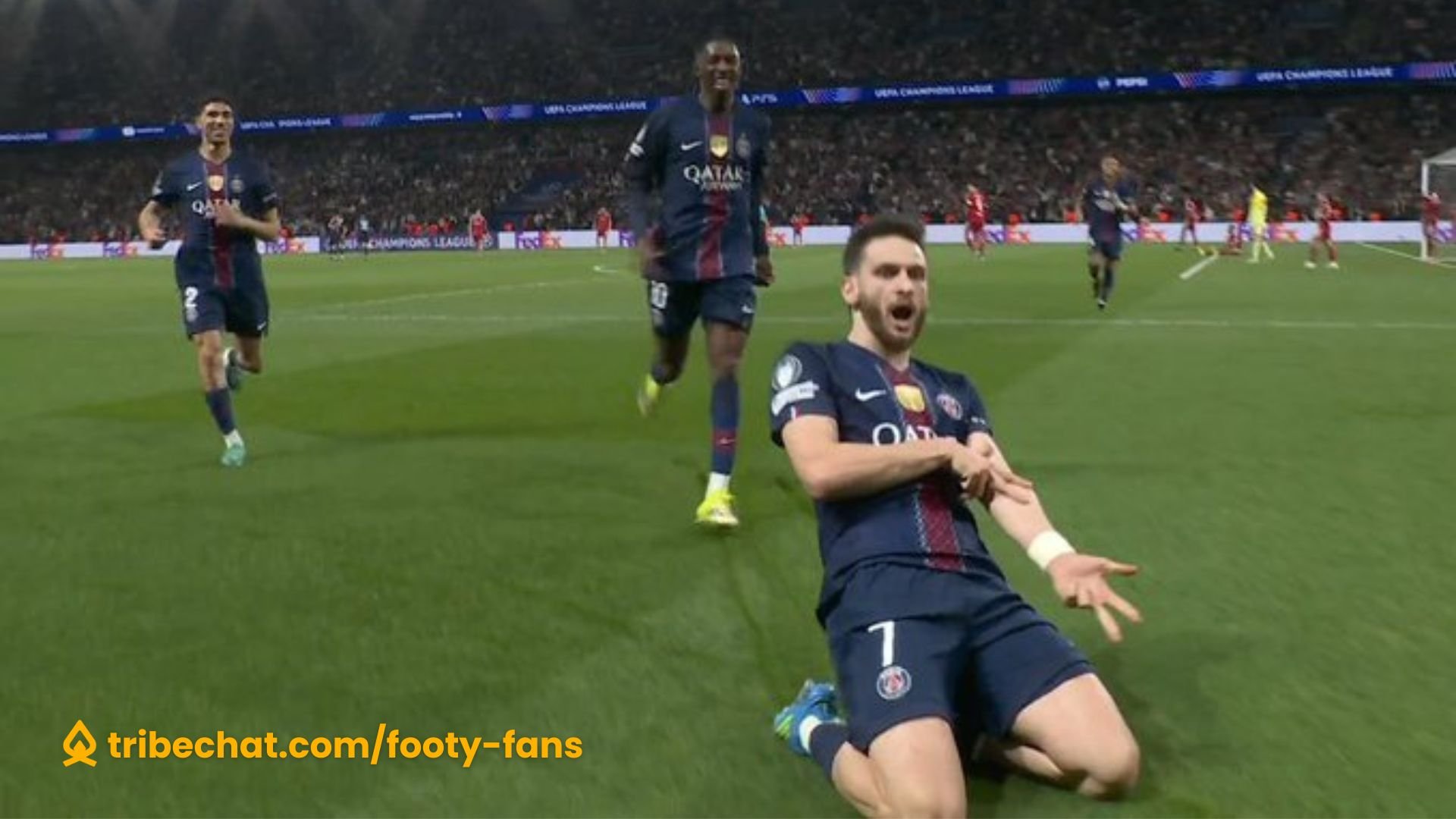
Why isn’t Khvicha Kvaratskhelia getting the recognition he deserves?
There’s a strange paradox unfolding in plain sight at Paris Saint-Germain. In a team stacked with headline magnets, one of the most devastating attacking players in Europe continues to exist just outside the spotlight. Khvicha Kvaratskhelia, “Kvara,” isn’t just good. He’s one of the most destabilizing wide players in world football. And yet, when the biggest individual accolades are discussed, his name is often an afterthought.
That disconnect says more about how we evaluate football than it does about Kvaratskhelia.
The Aesthetics Bias in Modern Football Recognition
When Ousmane Dembélé lifted the Ballon d’Or, it felt like a culmination of narrative as much as performance. Electric dribbling, highlight-reel moments, and a sense of unpredictability—Dembélé’s game is loud. It demands attention. Similarly, the rising discourse around Michael Olise is fueled by stylistic clarity: elegance, creativity, and a visual identity that translates easily into viral clips and digestible brilliance.
Kvaratskhelia operates differently. His chaos is subtler, more sustained. He doesn’t just create moments—he warps entire defensive structures over 90 minutes. And that kind of influence is harder to package.
The Liverpool Game: A Case Study in Controlled Destruction
When PSG faced Liverpool, Kvaratskhelia didn’t just “play well,” he systematically dismantled one of Europe’s most organized pressing systems. What stood out wasn’t just the take-ons or chance creation, but the variety of problems he posed.
He attacked the half-space, then hugged the touchline. He slowed the tempo to invite pressure, then accelerated past it. He manipulated defenders’ body positioning before even receiving the ball. This is high-level positional intelligence layered on top of elite technical ability.
Liverpool didn’t lose control in a single moment—they lost it gradually, because Kvara kept forcing micro-adjustments that compounded into structural instability.
That’s not highlight football. That’s domination.
The Gravity Problem
Elite attackers often exert what analysts call “gravity.” Their presence alone reshapes defensive behavior. Kvaratskhelia’s gravity is immense.
Fullbacks hesitate to step out. Midfielders are dragged wider than they’d like. Passing lanes open elsewhere because defenders overcommit to containing him. He creates value even when he’s not directly involved in the final action.
Compare that to more statistically visible players. Goals and assists are easy to count. But how do you quantify the winger who forces a defensive line to tilt just enough for someone else to score?
Kvara lives in that gray area.
System Fit vs. Individual Narrative
At PSG, Kvaratskhelia exists within a constellation of stars. That matters. Players like Dembélé or Olise often function as the primary creative hub in their teams, which naturally funnels attention—and credit—toward them.
Kvara, on the other hand, is both a focal point and a facilitator. He can dominate possession sequences, but he’s equally comfortable enabling others. Ironically, that versatility dilutes his narrative.
Football discourse still prefers clean storylines: the scorer, the creator, the star. Kvaratskhelia is all three, depending on the phase of play. And that complexity makes him harder to market as a singular Ballon d’Or archetype.
Risk Profile and Decision-Making
Another overlooked aspect of Kvara’s game is his risk calibration. He attempts difficult actions by dribbling in tight spaces, progressive carries under pressure…but rarely crosses into recklessness.
There’s a misconception that he’s purely instinctive. In reality, his decision-making is highly refined. He chooses when to destabilize and when to recycle possession. That balance is what separates elite dribblers from merely entertaining ones.
Dembélé’s game thrives on volatility. Kvara’s thrives on controlled unpredictability.
Why the Recognition Gap Exists
So why isn’t Kvaratskhelia in the same Ballon d’Or conversations?
Narrative Lag – He doesn’t have the long-standing global hype machine behind him.
Statistical Modesty (Relative) – His contributions are often pre-assist or structural rather than final.
Stylistic Subtlety – His dominance unfolds over sequences, not just moments.
Team Context – Sharing the spotlight at PSG dilutes individual credit.
The Reality: He’s Already There
The truth is, Kvaratskhelia doesn’t need a breakthrough season to “arrive.” He’s already performing at a level comparable to the players dominating award conversations.
The Liverpool performance wasn’t an anomaly…it was a reminder.
If football recognition continues to evolve toward deeper analytical understanding, valuing off-ball gravity, structural manipulation, and decision-making under pressure, then Kvara’s time will come.
But until then, he remains what he currently is: one of the most dangerous players in the world, hiding in plain sight.
