
The Global Cinephiles Group Chat Has a Question: Is Ryan Gosling on the Mount Rushmore of Actors?
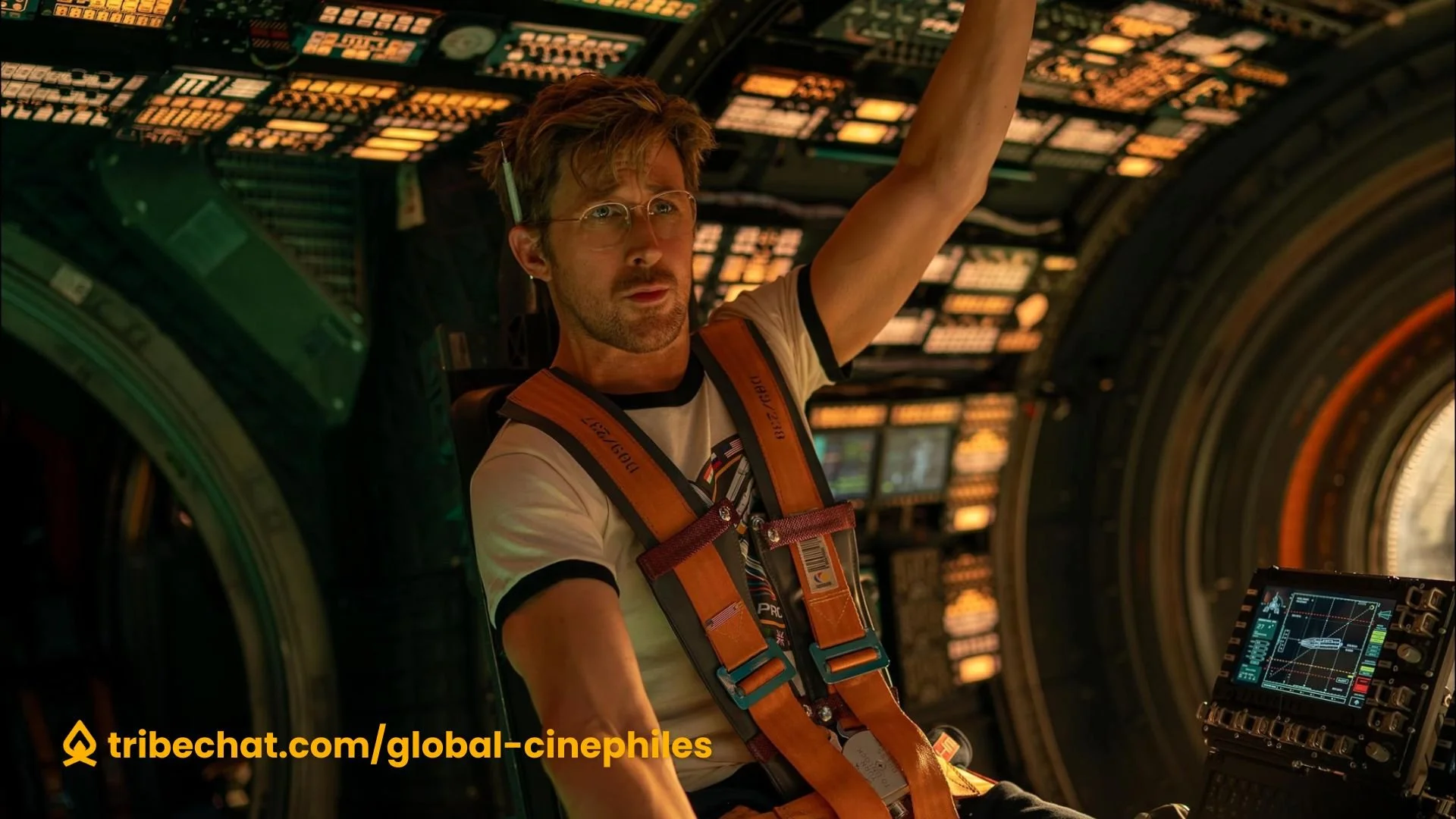
Does Ryan Gosling’s latest performance in Project Hail Mary put him on Mount Rushmore?
There is a specific kind of argument that only a movie group chat can sustain for hours: an argument that begins as a joke, immediately turns theological, and by the end has three people invoking Bresson, one person posting box office receipts, and somebody else saying “you are all confusing stardom with acting.” That is where we are with Ryan Gosling.
The trigger this time is Project Hail Mary, which opened on March 20, 2026, with Gosling starring as Ryland Grace under Phil Lord and Christopher Miller, and the film has been received as both a commercial hit and a broadly well-reviewed crowd-pleaser, even among critics who are mixed on parts of the film itself.
And this is where the chat divides.
Is praise this high seriously warranted?
One faction says Gosling has always had the movie-star cheat code: beautiful face, strange timing, built-in melancholy, instant watchability. Another faction says that description is too easy, too flattering, too imprecise. Because what Project Hail Mary makes newly obvious is that Gosling’s gift is not simply charisma. Plenty of actors have charisma. Gosling has control. He knows exactly how much feeling to withhold, exactly when to let absurdity puncture sincerity, exactly how to make intelligence look human rather than theatrical. In other words: he understands screen presence as an instrument, not as a glow.
That is why Project Hail Mary matters in the Mount Rushmore debate. Not because it is his “best” performance in some simple, consensus-list way. It matters because it crystallizes what Gosling has been doing for years across wildly different registers.
In Project Hail Mary, the challenge is unusually tricky. Ryland Grace is not a swaggering genius or a tortured antihero in the prestige-drama mold. He is, from the official synopsis forward, a science teacher who wakes up alone on a ship, disoriented, frightened, and gradually forced into the impossible labor of understanding both himself and a civilization-scale mission. The performance has to carry exposition, comedy, loneliness, awe, and escalating moral burden, often while operating inside a blockbuster framework that could easily flatten a character into “reluctant hero with quips.” Critics across outlets have converged on a version of the same point: even when the film gets broad or unwieldy, Gosling is the element that keeps it grounded, appealing, and emotionally legible.
What makes his work here interesting is that he refuses two temptations at once.
The first temptation is to play “science” as a performance of authority. Lesser actors, when handed technical dialogue and high-concept stakes, start signaling intelligence with speed, clipped diction, or that familiar furrowed-brow intensity that movies often mistake for thought. Gosling doesn’t do that. His Ryland Grace thinks like a teacher, not like a screenplay machine. He makes explanation feel social. He lets the process of reasoning remain slightly awkward, slightly improvisatory, touched by panic and humor. That is a subtle distinction, but it matters enormously. He does not present intelligence as domination. He presents it as effort.
The second temptation is to overplay the emotional isolation. A role like this almost begs for capital-A Acting: the monologues to emptiness, the tears into the void, the heavy punctuation of despair. Gosling instead leans into disorientation, embarrassment, and the tiny absurdities of survival. The result is more moving because it feels less announced. He has become one of the few major stars who really understands that vulnerability on screen often lands hardest when it arrives sideways. He knows that a laugh can expose terror faster than a sob can.
This has always been his central weapon: indirection.
That is why Gosling can seem, to people who do not really watch him, less “transformative” than his peers. He is not a prosthetics actor. He is not interested in the loud rhetoric of disappearance. He works in modulation. He changes the temperature of a scene by adjusting pressure rather than volume. Project Hail Mary depends on that exact skill, because the movie’s premise is huge while its emotional engine is intimate. The film wants scale; Gosling gives it proportion. The film wants wonder; Gosling supplies credibility. The film wants uplift; Gosling earns it by first giving us a man who seems equal parts competent, overwhelmed, funny, and not entirely convinced he should be the one history has chosen.
That mix is incredibly hard to play. Harder, in some ways, than the openly Oscar-bait roles people more readily canonize.
And once the group chat admitted that, the Mount Rushmore case stopped sounding unserious.
Because then you zoom out.
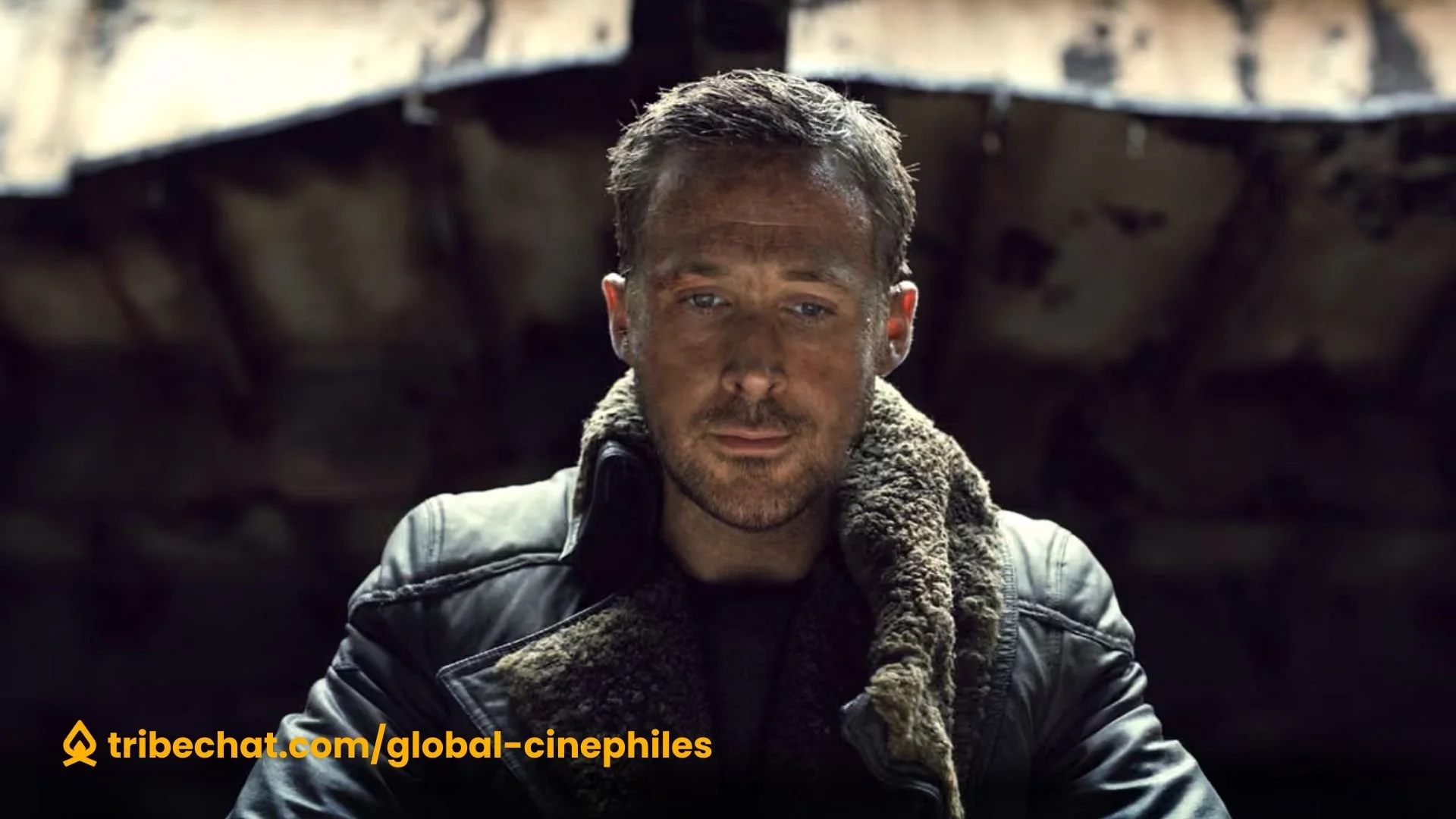
Blade Runner 2049 is arguably one of Gosling’s best performances.
Other noteworthy performances
Take Half Nelson, the performance that first put Ryan Gosling on the map as a serious actor.
What still stands out is how early he understood contradiction. Dan Dunne isn’t played as a cautionary tale or an indie archetype—he’s sharp, charismatic, and quietly collapsing at the same time. Gosling doesn’t reduce addiction to visible misery; he lets you see how intelligence and self-awareness can actually deepen the damage. That’s what makes it unsettling. The charm never fully disappears, which is exactly the problem.
Then Blue Valentine, where he flips that same charm into something tragic. Instead of a clean arc of “relationship rises and falls,” Gosling makes deterioration feel gradual and almost invisible until it’s not. He lets Dean be both deeply loving and fundamentally stunted, sometimes in the same breath. What’s devastating is that he never pushes you to judge the character—he just refuses to protect him.
Drive is a completely different register. Almost no dialogue, almost no overt emotion, and yet it’s one of his most iconic performances. What Gosling understands here is that stillness isn’t empty—it’s loaded. The Driver becomes compelling because you’re constantly trying to read him and never quite can. He turns silence into tension, into ambiguity, into something active. Very few actors can hold a screen like that without doing anything “big.”
Then La La Land, which people still underrate as just charm. It’s not. Gosling makes Sebastian difficult—proud, stubborn, occasionally insufferable—and that’s what gives the romance weight. He doesn’t sand down the ego to make the character more likable. Instead, he lets the idealism and the arrogance coexist, which makes the love story feel earned rather than fantasy.
And then Blade Runner 2049, maybe the clearest example of how strange his approach actually is. As K, he does the opposite of what most actors would do with a “becoming human” role. He doesn’t underline the transformation—he almost hides it. The performance lives in tiny shifts: a flicker of confusion, a delayed reaction, a feeling arriving just a second too late. It’s less about showing emotion and more about discovering it in real time.
This is really the Mount Rushmore argument. Not that Gosling has the loudest or most transformative performances, but that he keeps solving completely different acting problems without losing his core. He can go minimal, romantic, comedic, or existential, and it always feels like the same actor thinking through a new system.
And across all of it, the throughline is control. He knows when to pull back, when to let something land sideways, when to trust the audience to meet him halfway. That’s why the work sticks. It doesn’t announce itself—it lingers.
