
Embo came out of stealth on November 23, 2026 with a $110 million seed round led by Andreessen Horowitz, with Khosla Ventures, DST Global, NVIDIA's venture arm NVentures and other strategic investors joining. That is an enormous check for a company with no public product, and it lands in a month when robot brain startups have been raising money faster than most of us can track. What makes Embo worth a closer look is the bet underneath it, because the team wants robots to learn by practicing inside a learned simulation of the world before they ever touch a real drawer or cup.
The company is led by CEO Danijar Hafner, who created the Dreamer family of world model agents, and CTO Wilson Yan, who created VideoGPT, according to Embo's company page. If you build robots, write firmware for actuators or run a fleet on a warehouse floor, this round is a signal about where the money thinks robot intelligence is heading, and about the skills and data that will be worth the most over the next couple of years.
What Embo announced in its $110M seed round
Embo describes its plan as one unified model. The company says it pretrains that model from scratch on internet-scale video, fine-tunes it on robot experience collected from its own humanoid fleet, and then post-trains it with reinforcement learning. In its launch post, Embo puts the mission simply: "We are building the brain for intelligent robots to help people around the world." On the video side, the company argues that "predicting video teaches it about objects, physical interactions, and how tasks unfold."
The announcement also leans on the team's track record. Embo says its people pioneered Dreamer, VideoGPT and Diffusion Forcing, have worked at Google DeepMind, Meta Superintelligence Labs, NVIDIA Cosmos, UC Berkeley and MIT, and have built infrastructure for training multimodal models across 70,000 GPUs. The launch post does not give the size of the humanoid fleet, and Dealroom's report on the round notes that Embo has not disclosed its valuation, headcount or headquarters, and has no public product or named customers yet.
Why world models are the bet behind this robot brain
Most of the robot learning work you see today trains policies on demonstrations, often collected by people teleoperating arms or wearing gloves. That works, but demonstrations are expensive and they mostly show success. The a16z investment post, written by Justine Moore, Raghu Raghuram and Matt Bornstein, makes the case that "world models are the next generation of frontier AI" because they let a robot predict what its actions will do, recover from mistakes and handle places it has never seen.
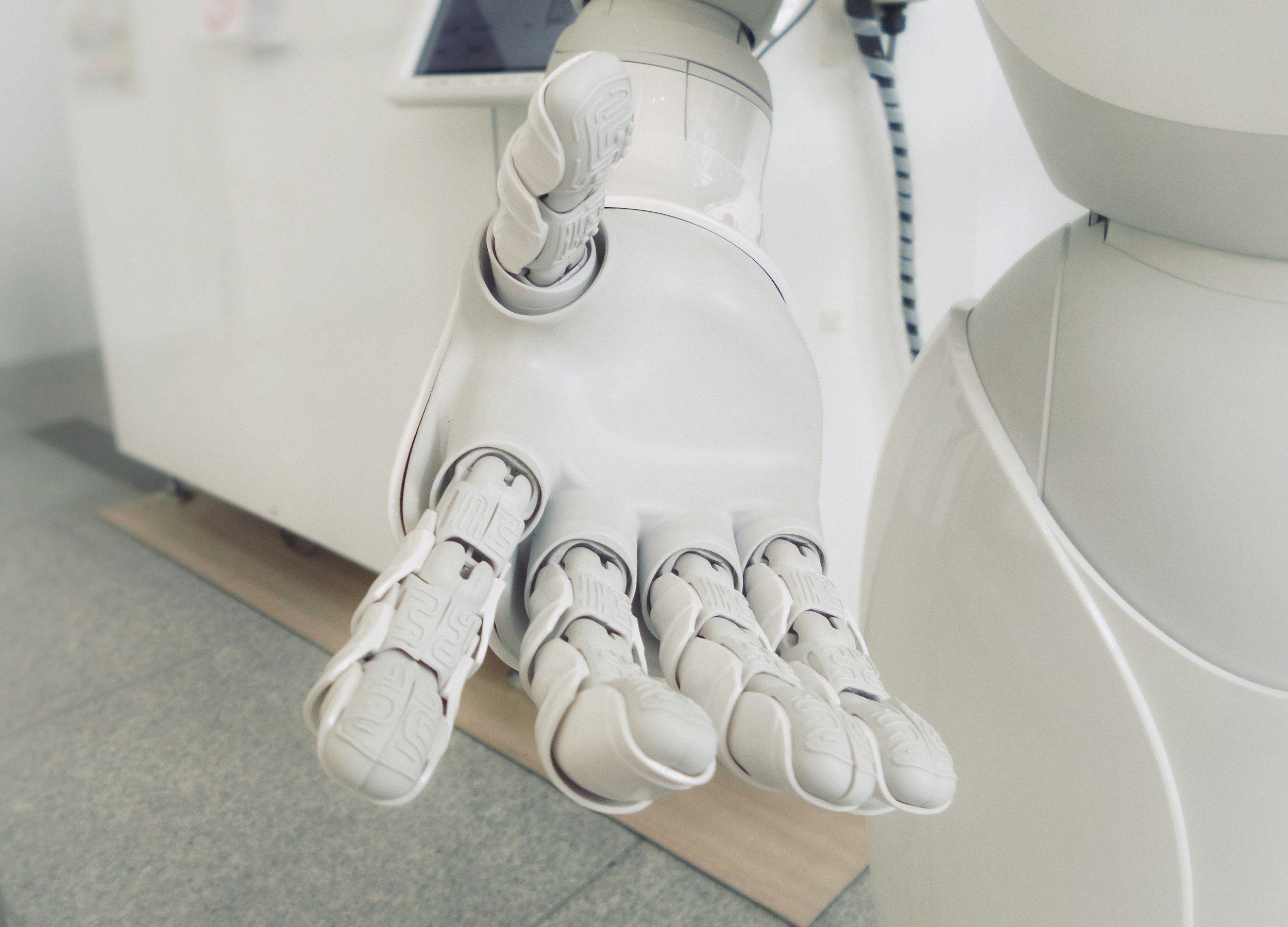
Photo: Franck V. / Unsplash. Featured photo: Gabriele Malaspina / Unsplash
The a16z partners frame the target as 2 hard problems, generalizing to unfamiliar environments and recovering from failure. Their examples are very physical: a robot in a kitchen it has never visited, an object slipping out of a gripper, a drawer that sticks. They point out that demonstrations rarely capture those failures, which is why practicing them inside a model is appealing. Hafner's own research history backs up the approach. Dreamer 4, a paper he co-authored with Yan and Timothy Lillicrap, learned to obtain diamonds in Minecraft purely from offline data, without playing the game to collect new experience.
If you followed our coverage of Rhoda AI's video-based robot model, the theme will feel familiar. Video is the largest pile of physical-world data anyone has, and several well-funded teams are now racing to turn it into motor skill.
Who built it and where the team works
Hafner is a familiar name to anyone who reads reinforcement learning papers. MIT Technology Review's September profile describes how he left Google DeepMind in fall 2025 to start a company, which was then unnamed and in stealth, and says its office in San Francisco's SoMa district already held humanoid robots. The same profile walks through his earlier projects, including PlaNet, Dreamer 3, which was the first to solve the Minecraft diamond challenge, and DayDreamer, which applied Dreamer to physical robots in new environments.
Yan's work on VideoGPT matters here because video generation is the engine of the world model idea. Embo's company page also credits him with building what it calls the first million-token context model. Put those 2 skill sets together and you get a team that knows how to train giant video models and how to train agents inside them, which is exactly the combination this approach needs.
How Embo fits the robot brain funding race
Embo joins a crowded field. Dealroom's write-up lists Physical Intelligence's $600 million raise in November 2025 and Skild AI's $1.4 billion round in January 2026 at a $14 billion valuation as context, and places Embo's round in the top 1% of US seed deals in its computer vision category. Closer to home, our recent posts on Genesis AI's $500M Series A and Humyn Labs and the market for robot training data show how many different answers investors are funding at once, from glove-collected demonstrations to dedicated data businesses.
The split is getting clearer. One camp believes the shortest path is more and better real-world robot data. Embo's camp believes internet video plus imagined practice can cover most of the gap, with a smaller amount of real fleet experience to ground it. Both camps still need hardware, and both still need people who can make a robot behave safely on a real floor.
What it means for robotics founders, engineers and operators
For founders building on top of robot foundation models, a well-funded world model lab is a reason to keep your application layer model-agnostic. If Embo or a peer ships a general brain that works out of the box in new settings, the value moves toward integration, safety cases, customer workflows and the specific tasks you own. Founders building data collection businesses should watch closely too, since a team that can learn from video and imagined practice may want less teleoperation data, but it will still want high-quality fleet data for fine-tuning.
For hardware and controls engineers, the interesting detail is that Embo fine-tunes on its own humanoid fleet. That points to demand for reliable, well-instrumented humanoid platforms, clean sensor logging and fast reset loops, because every hour of real robot experience feeds the model. Engineers who understand both reinforcement learning and the messy realities of actuators, latency and calibration will be in short supply.
For operators in manufacturing, logistics and service businesses, a16z's list of potential uses (manufacturing, product movement and service delivery) is a fair map of where pilots could show up first. A healthy dose of patience fits here, since Embo has not shown a commercial product, and the a16z post describes a direction more than a deployment. Still, operators should pay the closest attention to failure recovery, because a robot that can handle a stuck drawer without a support ticket is the one that pays back. For a broader view of where the money went this year, see our Q3 2026 robotics startup funding roundup. For the software side of the same funding wave, see our breakdown of Sierra AI raising $1.75B at a $30B valuation.
Find your people in robotics
Rounds like this are more fun to argue about with people who build the stuff. If you're building robots or just love following the field, apply to join Futurists in Robotics. If you do robotics research, Embodied Frontier is the group built for researchers, and you can apply there too.
Prefer meeting in person? Follow Tribe's events calendar on Luma so you see new founder dinners and talks as soon as they post, including Tribe of Founders: An Intimate Monthly Dinner on December 10.
