
Anthropic's first day as a public company ended with ANT at $97.17, up 17% from its $83 IPO price, after opening near $111 and swinging hard during the session, Deadline reported. Whether that counts as a strong debut depends on what you compare it to, and the last 15 years of tech listings give us plenty of comparisons.
Below are 5 case studies of big tech IPOs, from Facebook in 2012 to SpaceX in June 2026, with what happened on day 1 and what founders and investors took away from each. The numbers come from contemporary reports, and the lessons are about how IPOs work, not predictions about any stock.
Facebook 2012: a record raise and a rough first week
Facebook priced at $38 a share in May 2012, the top of its range, valuing the Menlo Park company at $104 billion, according to Wikipedia's account of the Facebook IPO. Trading was delayed by 30 minutes because of technical problems at Nasdaq, and glitches kept orders from going through for much of the day.
The stock jumped as high as $45 early, then spent the afternoon fighting to stay above $38. Underwriters bought shares to support the price, and it closed at $38.23, only 23 cents above the offer. A week later it was at $26.81. The day still set a record for IPO trading volume at 460 million shares.
The lesson most people took: raising the price and the share count right before launch can leave nothing on the table for day-1 buyers. Facebook got maximum proceeds, and early public buyers absorbed the drop.
Uber 2019: priced conservatively and still fell
Uber priced at $45 for an $82.4 billion valuation in May 2019, well below the $100 billion to $120 billion some had expected, TechCrunch reported. It opened at $42 and closed at $41.57, down 7.6%. The company still came away with $8.1 billion of new cash on its balance sheet.
Uber is a reminder that a lower price doesn't guarantee a pop. Investors were focused on losses and the path to profit, and a cautious price couldn't change that story on day 1. For founders, it shows how much the narrative in the S-1 matters, a topic we cover in our guide on how to read an S-1.
Snowflake 2020: the pop that left money on the table
San Mateo's Snowflake priced at $120 in September 2020, opened at $245 and closed at $253.93, valuing the company at more than $60 billion, GeekWire reported. It raised $3.4 billion in what was then the largest software IPO ever.
Investors cheered, but a big pop also means the company sold shares far below what the market would pay. The SEC's investor bulletin on IPOs explains the tension: underwriters want a price their clients like, while the company wants to raise as much as it can, so a large first-day "bump" can leave the issuer unhappy. Snowflake is the classic Peninsula example. Tribe organizes South Bay Renaissance to rebuild the South Bay and Peninsula startup scene in person, and IPO stories like this one come up at almost every founder dinner.
Arm 2023: a smaller float and steady demand
Arm priced at $51 in September 2023, the high end of its range, raising $4.87 billion, IPOScoop reported. It opened at $56.10 just after noon and closed at $63.59, up 24.7%. SoftBank sold only about 9.5% of Arm's shares, and 10 cornerstone investors, including Apple, Google, Nvidia and Samsung, had signaled interest in up to $735 million of stock.
The takeaway is supply. A small float plus strategic buyers who aren't likely to flip can support a stock in its first days. Anthropic used a similar playbook with its $26 billion placement to chip and cloud partners, though its float is far larger.
SpaceX 2026: a long wait for the first trade
SpaceX's $75 billion IPO in June held the record until this week. Its final prospectus set the price at $135, and when it listed on June 12 the first trade didn't happen until 11:46 a.m. Eastern, at $150, or 11.1% above the offer, according to Stock Titan's IPO tracker. On Nasdaq, a new listing opens only when the lead bank says the book is ready, so mega-deals can take hours.
Anthropic followed the same pattern, opening just before noon. If you're watching a big listing, the opening price and the IPO price are 2 different numbers, and retail orders placed at the open may fill well above the offer.
What these IPO case studies mean for ANT
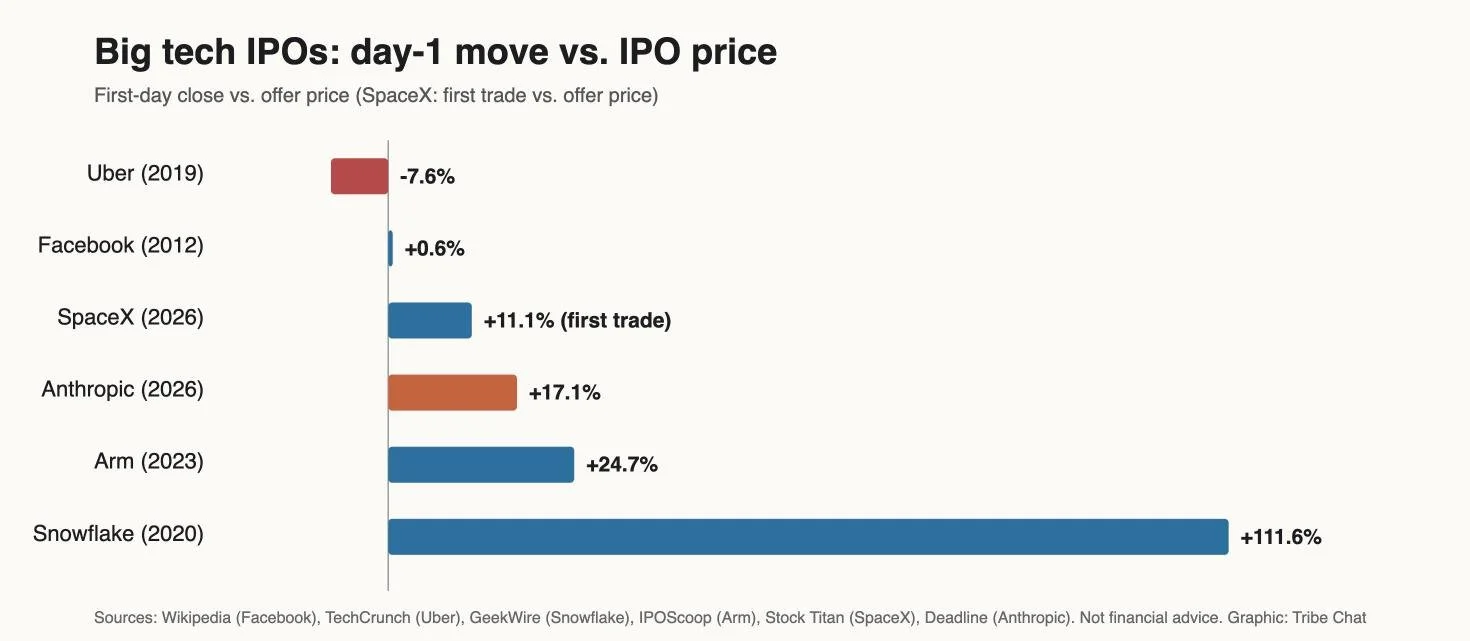
Put the 6 debuts side by side and you get a wide spread: Uber fell 7.6%, Facebook rose 0.6%, SpaceX's first trade came in 11.1% higher, Anthropic closed up 17%, Arm rose 24.7% and Snowflake more than doubled. Day-1 moves say more about pricing, float and market mood than about the company's long-term value, and Facebook's first-week drop shows how fast sentiment can turn.
A few patterns repeat. Pricing above the range is a demand signal, but it shifts gains from buyers to the company. Lockups matter too: the SEC's lockup guide says most run about 180 days, and stocks can slide as that supply approaches. For the full ANT picture, read our Anthropic IPO explainer, and for another AI stock debate, our Nvidia stock analysis and Allbirds AI pivot breakdown are worth a look.
Talk IPOs with other investors
IPO season is more fun with people who remember the Facebook open and the Snowflake pop. Apply to join the Investing Ideas Tribe to trade notes on new listings, earnings and the AI trade, and follow the Tribe Events calendar on Luma for founder meetups around the Bay Area.
This post is for discussion and education only and is not financial advice. Past IPO results don't predict future performance. Do your own research or talk to a licensed advisor before investing.
Header photo: Anne Nygård / Unsplash.
